
Essay
Thirty Years of The Asian Renaissance
From Asia's Rise to Asia's Responsibility
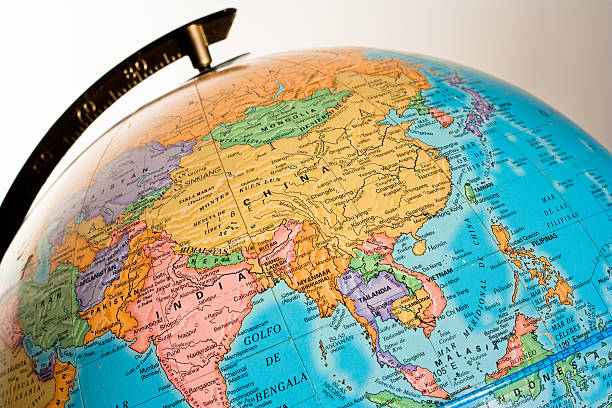
Thirty years ago, in 1996, Anwar Ibrahim published The Asian Renaissance at a moment when confidence in Asia was surging. East and Southeast Asia were being celebrated for rapid economic growth, industrial expansion and stronger political voices. The phrase "Asian miracle" had entered the global vocabulary, and the future seemed to be moving eastward. Yet The Asian Renaissance was never simply a celebration of economic success. Its deeper concern was civilisational. The book asked whether Asia's material resurgence could be accompanied by something more enduring: intellectual confidence, cultural renewal, ethical leadership, social justice, pluralism and a more mature dialogue between civilisations.
The book challenged the assumption that modernisation required imitation. It rejected the idea that Asian societies had to choose between tradition and progress, between rootedness and openness, or between cultural identity and universal human aspirations. Its central insight was that Asia could modernise without losing itself. Three decades later, that question has become even more important. Asia has indeed risen, but the question now is what Asia will do with its rise.
When The Asian Renaissance appeared, much of the world still viewed Asia mainly through the prism of development. Japan was already an economic power. The Asian Tigers had demonstrated extraordinary growth. China was accelerating its transformation. Southeast Asia was integrating more deeply into global markets, while India had begun a new phase of economic liberalisation. Economic progress was the dominant narrative. But Anwar's argument implicitly warned against confusing prosperity with civilisation.
A civilisation cannot be measured only by the size of its economy. It must also be measured by the quality of its institutions, the dignity of its citizens, the vitality of its culture, the seriousness of its intellectual life and the integrity of its leadership. Prosperity matters, but prosperity without purpose is incomplete. This distinction may be the most enduring legacy of The Asian Renaissance: economic success creates capacity, while civilisational renewal gives that capacity direction.
Today, Asia has achieved levels of wealth, technological capability and geopolitical influence that were difficult to imagine in 1996. China has emerged as one of the world's largest economic and technological powers. India has become a major global economy and an increasingly consequential geopolitical actor. Japan and South Korea remain leaders in advanced technology and industrial capability, while Southeast Asia has developed into one of the world's most dynamic regional economic ecosystems.
The Gulf has also become an important centre of capital, energy, logistics and technological ambition. Asian cities, universities, companies, cultural industries and scientific institutions increasingly shape global trends. The balance of economic gravity has shifted significantly. Yet the rise of Asia has created a new question. If the twentieth century was largely about Asia recovering political sovereignty, and the early twenty-first century about recovering economic strength, what should the next phase be about? The answer cannot simply be more power. It must be more meaning.
The answer cannot simply be more power. It must be more meaning.
One of the major intellectual debates of the 1990s concerned "Asian values." It was an important debate, but it was often defensive. Were Asian societies fundamentally different from Western societies? Should community take precedence over individualism? Could democracy and human rights be interpreted differently across cultures? Thirty years later, the more interesting question is no longer whether Asian values are different.
The more ambitious question is what new possibilities Asian civilisations can contribute to humanity. Asia need not define itself primarily in opposition to the West. A mature civilisation does not require an adversary in order to know itself. The next Asian Renaissance should therefore move from defensiveness to imagination, from identity to contribution, from imitation to invention, from catching up to thinking ahead, and from Asian power to Asian purpose.
The measure of Asia's success should not be whether it replaces the West at the centre of world affairs. It should be whether it expands the range of ideas available to humanity. That means Asia must become not only a producer of goods, capital and technology, but also a producer of original thought, institutions and models of human development.
One of the difficulties in speaking about "Asia" is that Asia is not one civilisation. It is a civilisation of civilisations. Confucian, Buddhist, Hindu, Islamic, Persian, Malay-Nusantara, Japanese, Korean, Central Asian and indigenous traditions coexist across an immense continent. There is no single Asian worldview, and perhaps there should not be. The strength of Asia lies precisely in its plurality.
Its future should therefore not depend on uniformity. It should depend on a deeper capacity for dialogue across difference. This is where the idea of an Asian Renaissance remains powerful. A renaissance is not a return to the past. It is a creative retrieval of the past in order to generate new futures. The purpose is not to restore some imagined golden age, but to recover intellectual resources that may help societies address contemporary problems.
Confucian ideas about ethical leadership and relational responsibility, Islamic traditions of justice, knowledge and stewardship, Buddhist reflections on compassion and human flourishing, Indian traditions of pluralism and philosophical argument, and Malay concepts of community and balance should not become museum pieces. They should become resources for thinking. They can help Asia imagine forms of modernity that are confident, plural and grounded without becoming inward-looking.
The most profound difference between 1996 and 2026 is technological. The world is entering an age in which intelligence itself is becoming increasingly machine-mediated. Artificial intelligence is already transforming work, education, science, media, creativity, government and economic organisation. This changes the meaning of an Asian Renaissance.
The question is no longer only how Asian societies should modernise. It is also how human beings should remain central in societies increasingly organised around intelligent systems. What happens to work when machines can perform cognitive tasks? What happens to education when knowledge becomes instantly accessible? What happens to creativity when machines can generate images, music, text and code? What happens to political power when data and computational capability become concentrated?
These are not merely technological questions. They are civilisational questions. Asia, because of its scale, technological capability and diversity, will be one of the principal places where these questions are answered. The next Asian Renaissance must therefore include a philosophy of technology. It must insist that technological progress remains subordinate to human flourishing and that innovation must ultimately enlarge human agency rather than diminish it.
The next Asian Renaissance should ultimately become a Human Renaissance.
This may be the most important evolution of the original idea. The next Asian Renaissance should ultimately become a Human Renaissance. Asia's first economic miracle was powered by labour, manufacturing, exports, infrastructure and disciplined industrialisation. The next transformation will depend increasingly on creativity, judgement, knowledge, imagination, entrepreneurship and collaboration.
Human potential will become one of the continent's most important strategic resources. That requires a profound shift in institutions. Education systems must move beyond standardisation. Workplaces must move beyond rigid hierarchy. Economies must recognise value beyond conventional employment. Communities must become spaces for participation and mutual support. Technology must augment human agency rather than diminish it.
Development must also move beyond GDP toward a richer conception of human possibility. The next Asian miracle may therefore not be primarily industrial. It may be the liberation of human potential at unprecedented scale. If that happens, Asia's rise will no longer be defined only by productivity and output, but by the capacity of its people to create, contribute and flourish.
Another dimension of the next Asian Renaissance concerns community. Rapid economic development has generated enormous opportunities across Asia, but it has also produced fragmentation. Urbanisation has weakened traditional social structures. Digital platforms have connected people while often making relationships thinner. Economic competition has intensified insecurity. Young people face new forms of loneliness and dislocation, while ageing societies face pressures of care and belonging.
In this context, Asia's traditions of relational society may become newly relevant. Not as nostalgia, but as a basis for institutional innovation. The future may require new forms of community organisation, cooperative economics, participatory governance, local networks and digital commons. The choice need not be between individual freedom and community. The deeper question is how to create institutions that support both autonomy and belonging.
The Asian economic miracle was built through industrialisation, but the ecological consequences of industrial civilisation are now impossible to ignore. Climate change, biodiversity loss, pollution, water stress, food insecurity and extreme weather will profoundly affect Asia. A genuine renaissance cannot simply reproduce the ecological assumptions of twentieth-century development.
Civilisational renewal must include ecological renewal. Asian societies will have to create new models of prosperity that reconcile economic development with planetary limits. This may require drawing from both science and older philosophical traditions that understood human beings as embedded within nature rather than standing outside it. The next Asian Renaissance must therefore include not only the relationship between East and West, or tradition and modernity, but also the relationship between civilisation and nature.
The geopolitical landscape has also transformed dramatically. The post-Cold War moment of 1996 appeared to point toward a largely Western-led global order. That certainty has disappeared. The world is becoming increasingly multipolar, with China, India, ASEAN, Japan, Korea, the Gulf and other Asian actors shaping global institutions, trade, technology and diplomacy.
But multipolarity itself does not guarantee a better world. It can generate competition, fragmentation and conflict. The responsibility of an Asian Renaissance is therefore not simply to seek greater Asian influence. It is to ask what kind of international order Asia should help create. One defined by domination, or one defined by coexistence?
The most valuable contribution Asia could make may be to demonstrate that civilisational confidence does not require civilisational confrontation. The alternative to Western hegemony should not be Asian hegemony. It should be a more plural world in which different civilisations can contribute without demanding uniformity.
Perhaps the most important task ahead is intellectual. For generations, Asian societies imported institutions, theories, economic models and political concepts developed elsewhere. There was nothing inherently wrong with learning from the world. Civilisations have always advanced through exchange. The problem arises when learning becomes imitation.
The next Asian Renaissance requires intellectual confidence: the ability to absorb ideas from everywhere while remaining capable of generating original frameworks from Asian historical experience. Asia must become not only a producer of technology and capital, but a producer of ideas. It must contribute new thinking about economic organisation, human-centred AI, education, community, ecological civilisation, pluralism, work, cities, democracy, social responsibility and human dignity.
The Asian Renaissance should not seek to prove that Asian ideas are superior. Its ambition should be higher. It should seek to produce ideas that are useful to humanity. That is the difference between civilisational confidence and civilisational arrogance.
Thirty years after The Asian Renaissance, the book's most enduring contribution is therefore not a prediction. It is a question: what should Asia become? That question remains open, but today it carries greater weight because Asia possesses more capacity to answer it. With power comes responsibility. With prosperity comes choice. With technological capability comes ethical obligation.
The next Asian Renaissance should not be measured by whether Asian cities become richer than Western cities, whether Asian companies become larger than Western companies, or whether Asian states become more powerful than Western states. Those are measures of competition. A renaissance requires a different measure.
Can Asia create societies in which human beings flourish? Can it build economies that generate prosperity without abandoning justice? Can technology enlarge rather than diminish human agency? Can culture remain confident without becoming exclusionary? Can civilisations engage one another without domination? Can Asia contribute ideas that make the world more humane?
These are the questions worthy of the next thirty years. In 1996, The Asian Renaissance asked Asia to rediscover its civilisational confidence. In 2026, the challenge is greater. Asia must transform that confidence into creativity, its prosperity into purpose, its power into responsibility, its diversity into dialogue, and its rise into contribution.
The first Asian Renaissance was a call for renewal. The next must become a project of creation.
Asia has risen. The Renaissance is what comes next.